

- HEMP FIBER 101
How Hemp Fiber Is Processed
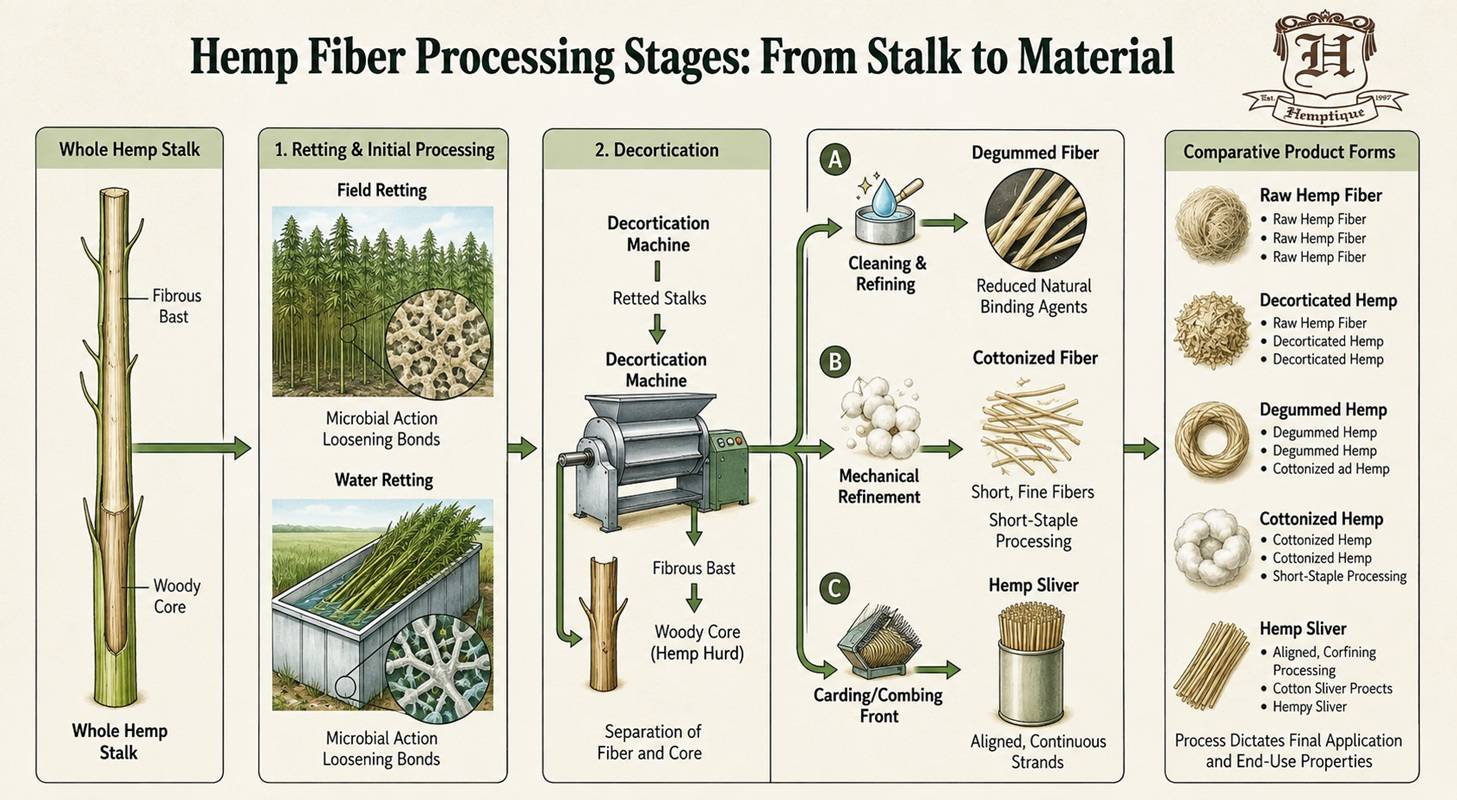
Hemp fiber starts as part of the plant stalk, but the material used for spinning, textiles, manufacturing and other applications looks very different by the time it is ready to work with.
That change happens through a series of processing steps. Retting helps loosen the plant material. Decortication separates the fibrous outer portion of the stalk from the woody core. Further cleaning and refinement can produce degummed fiber, cottonized fiber or aligned forms such as hemp sliver.
The exact process depends on the type of fiber being produced and its intended use. Understanding these stages also makes terms such as decorticated, degummed and cottonized hemp much easier to understand when comparing hemp fiber products.
From Hemp Stalk to Usable Fiber
The hemp stalk contains two materials that are important during fiber processing.
The outer portion contains bast fibers, which run lengthwise along the stalk. Inside is a woody core commonly called hurd or shiv.
Processing separates these materials and prepares the bast fiber for its next use.
A simplified path looks like this:
Harvested Hemp Stalk → Retting → Decortication → Cleaning & Refining → Further Fiber Preparation
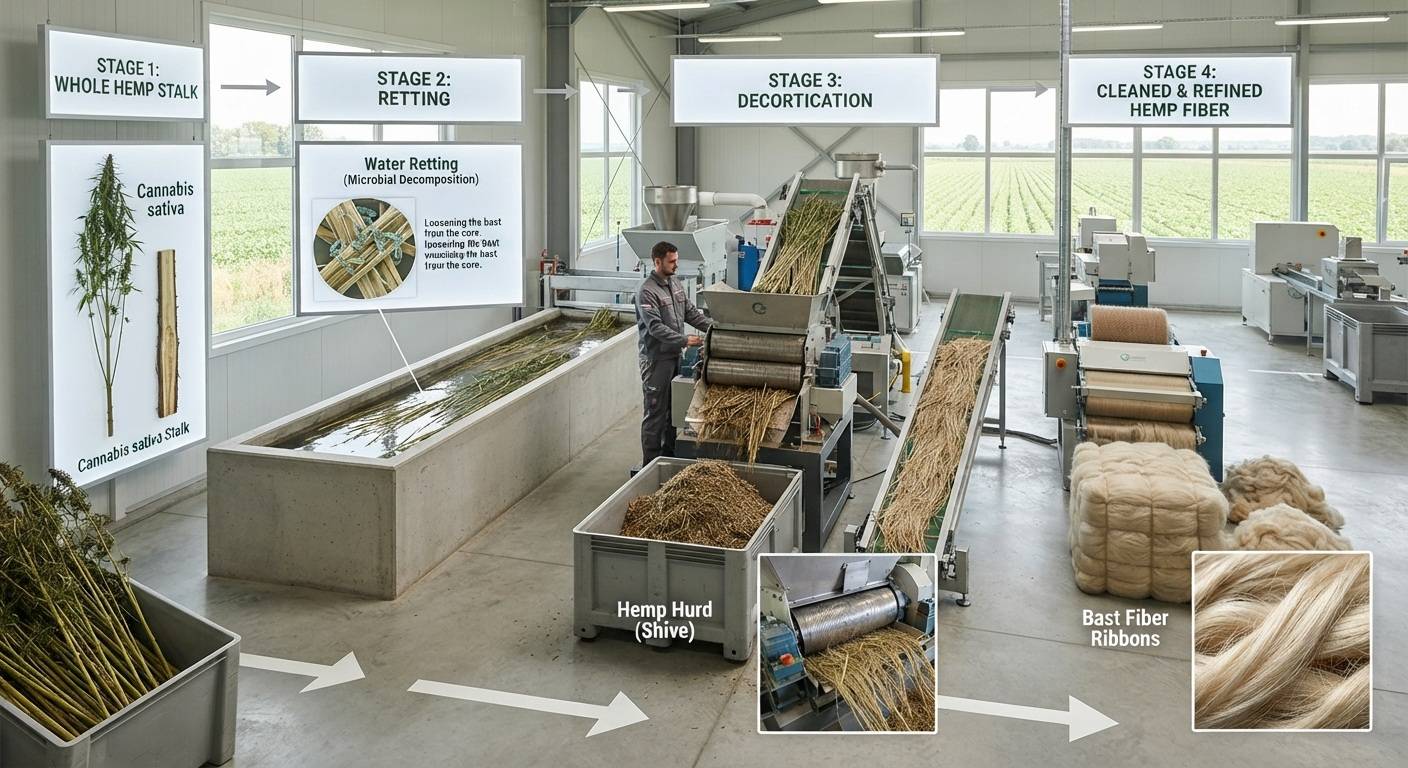
This is a simplified overview. Hemp fiber does not always move through every stage or follow the same processing route.
Retting Prepares Hemp for Fiber Separation
Retting is an early stage in traditional hemp fiber processing. It helps loosen the natural materials that bind the bast fibers to surrounding plant tissue, making the fibers easier to separate later.
The hemp stalks are exposed to conditions that allow those binding materials to begin breaking down. Retting can be carried out using different methods, including field or dew retting and water-based processes.
The goal is controlled separation. Insufficient retting can make the fibers difficult to remove from the stalk, while excessive retting can affect fiber quality.
Once retting is complete, the stalk can move on to mechanical separation.
What Is Hemp Decortication?
Decortication is the mechanical separation of the hemp stalk.
During this stage, the stalk is broken and processed so the bast fiber can be separated from the woody hurd inside. The result is two distinctly different hemp materials.
The bast portion can continue through cleaning and fiber refinement. The hurd can be graded, chopped, milled or otherwise prepared for uses such as animal bedding, soil applications and industrial materials.
Decortication is therefore a major dividing point in hemp processing:
Hemp stalk → Bast fiber + Hemp hurd
Decorticated hemp fiber may still contain irregularities or residual plant material depending on how it has been processed. It can undergo further cleaning and refinement before reaching the form needed for a particular application.
Hemptique carries Green Decorticated Hemp Fiber, an example of bast fiber supplied at this stage of preparation.
Cleaning and Refining Hemp Fiber
Separating bast fiber from hurd doesn't necessarily produce finished fiber.
After decortication, the material may need further mechanical cleaning to remove remaining pieces of woody material and other plant matter. Fiber bundles may also be opened and separated further.
How much refinement takes place depends on what the fiber will become.
Material intended for further industrial processing may require a different level of preparation from fiber intended for textile development. Long-fiber processing also places different demands on the material than processes that deliberately produce shorter fibers.
This is why two products described as hemp bast fiber can look and feel quite different even though they originated from the same part of the plant.
What Is Hemp Fiber Degumming?
Even after bast fiber has been separated from the stalk, individual fibers remain naturally bound together in bundles.
Degumming is an additional refinement step that reduces the natural binding materials surrounding the fibers. This helps separate the bundles further and produces a cleaner, finer fiber form.
Degumming can be carried out using different mechanical, chemical, biological or combined methods. The exact method and level of treatment depend on the required fiber characteristics and subsequent processing.
The visible result can be quite different from less-refined decorticated fiber. Degummed material generally has greater fiber separation and is prepared for additional steps such as alignment, blending or textile processing.
The term degummed therefore tells you something important about how far the material has progressed beyond the initial separation of bast and hurd.
Hemptique's Hemp Fiber collection includes Degummed Hemp Sliver, which combines degummed fiber with additional preparation into an aligned fiber form.
What Does Cottonized Hemp Mean?
The term cottonized hemp can be misleading if you're seeing it for the first time.
Cottonized hemp is hemp fiber that has been processed into a shorter, finer form. The term does not mean that cotton has been added to the hemp.
Natural hemp bast fibers can be much longer and coarser than the fibers typically handled by short-staple textile systems. Cottonization changes the physical form of the hemp so that it can be processed more like a shorter textile fiber.
The process can involve further opening, cleaning, separating and shortening of the fiber bundles. Depending on the processing system, degumming or other refinement may take place before or during preparation.
The resulting material is considerably different from long, relatively coarse bast fiber.
Why Is Hemp Cottonized?
Traditional long-fiber hemp processing relies on preserving and aligning longer fibers. Cottonization takes a different approach.
By producing shorter and finer hemp fibers, manufacturers can prepare hemp for processing systems built around short-staple fibers and make it easier to blend hemp with compatible fibers where required.
This means cottonization is not simply another name for cleaning hemp. It intentionally changes the fiber's physical form for subsequent processing.
Hemptique carries Degummed Cottonized Hemp Fiber, which has undergone both fiber refinement and cottonization.
How Hemp Fiber Becomes Sliver
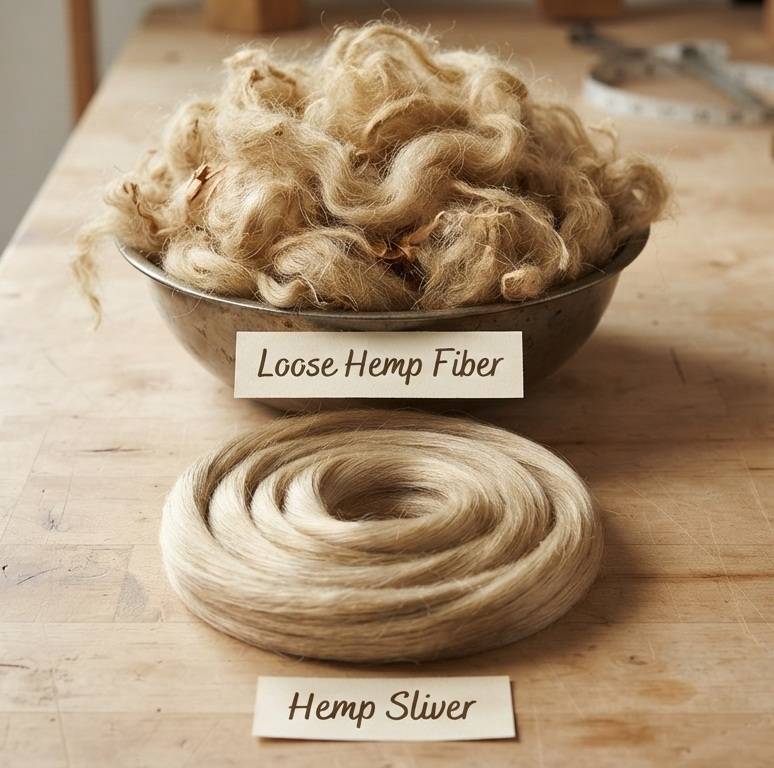
Sliver describes the form of the prepared fiber, rather than the plant material it originally came from.
Loose fibers are opened, organized and aligned so they form a continuous, untwisted strand. The resulting material is called sliver.
At this stage, the fibers are more orderly than loose hemp fiber, but they have not been spun into finished yarn.
This distinction is useful:
Loose fiber → Fibers opened and aligned → Sliver → Further processing
Sliver can be easier to feed into subsequent fiber-processing stages because the fibers have already been gathered into a more consistent, aligned form.
Hemptique currently carries Dark Hemp Sliver and Degummed Hemp Sliver. Their appearance also makes the difference between loose fiber and sliver easy to see: the sliver forms a long, continuous bundle rather than an irregular mass of loose fibers.
Does Every Hemp Fiber Go Through the Same Process?
No. The processing route depends on the fiber being produced and what needs to happen to it next.
A manufacturer trying to preserve longer bast fibers has different requirements from one producing short, cottonized hemp.
For example, one processing route may focus on maintaining fiber length and alignment. Another may intentionally shorten and refine the fibers for short-staple processing. Some industrial materials may require less refinement and stop at an earlier stage.
This is why the processing flow shown earlier should be viewed as a guide rather than a fixed sequence.
Terms such as decorticated, degummed, cottonized and sliver help identify what has happened to the material and the form it has reached.
How Processing Changes Hemp Fiber
Each processing stage can change one or several characteristics of the material.
Fiber Length
Some processing methods aim to preserve longer bast fibers. Others intentionally reduce fiber length.
This is one reason hemp is available as long fiber, short fiber and cottonized material.
Fiber Separation
Raw bast material consists of fiber bundles held together by natural plant substances.
Mechanical refining and degumming can progressively separate those bundles, creating finer material for subsequent processing.
Cleanliness and Refinement
Decortication performs the initial separation between bast and hurd, but additional cleaning may be required to remove remaining woody particles and plant material.
Further processing produces increasingly refined fiber forms.
Fiber Alignment
Loose fibers do not necessarily run in the same direction.
Preparing the material as sliver organizes the fibers into a more aligned, continuous form suitable for further fiber processing.
The result is a range of hemp materials that can look remarkably different even though they all originated from bast fiber in the hemp stalk.
Hemp Fiber Processing Terms Explained
If you're comparing hemp fiber products, these terms tell you about the processing or physical form of the material.
| Term | What It Means |
|---|---|
| Decorticated | Bast fiber has been mechanically separated from the woody portion of the hemp stalk |
| Degummed | Fiber has undergone additional processing to reduce natural materials that bind fiber bundles together |
| Cottonized | Hemp has been refined into a shorter, finer fiber form for short-staple processing |
| Sliver | Fibers have been organized and aligned into a loose, continuous strand |
| Long fiber | Greater bast fiber length has been retained |
| Short fiber | Bast fiber is supplied or prepared at a shorter length |
These terms can overlap. A product can be both degummed and cottonized, for example, or degummed and prepared as sliver.
If you're comparing the different forms available instead of the processing itself, see Hemp Fiber Types and What They're Used For.
From Hemp Stalk to the Fiber You Need
Processing determines much of what you eventually see when you buy hemp fiber.
Decortication separates bast fiber from the woody stalk core. Further cleaning and degumming refine the material, while cottonization produces a shorter, finer fiber form. Sliver preparation organizes fibers into an aligned, continuous strand for further processing.
Understanding these terms makes it easier to compare hemp materials based on what has already been done to the fiber and what still needs to happen next.
Explore Hemptique's selection of long and short hemp fiber, decorticated and cottonized fiber, hemp sliver and other hemp materials for your next project or application.