

– HEMP FIBER 101
Hemp Fiber Types and What They’re Used For
Avoid common sizing mistakes and choose the right cord thickness from the start
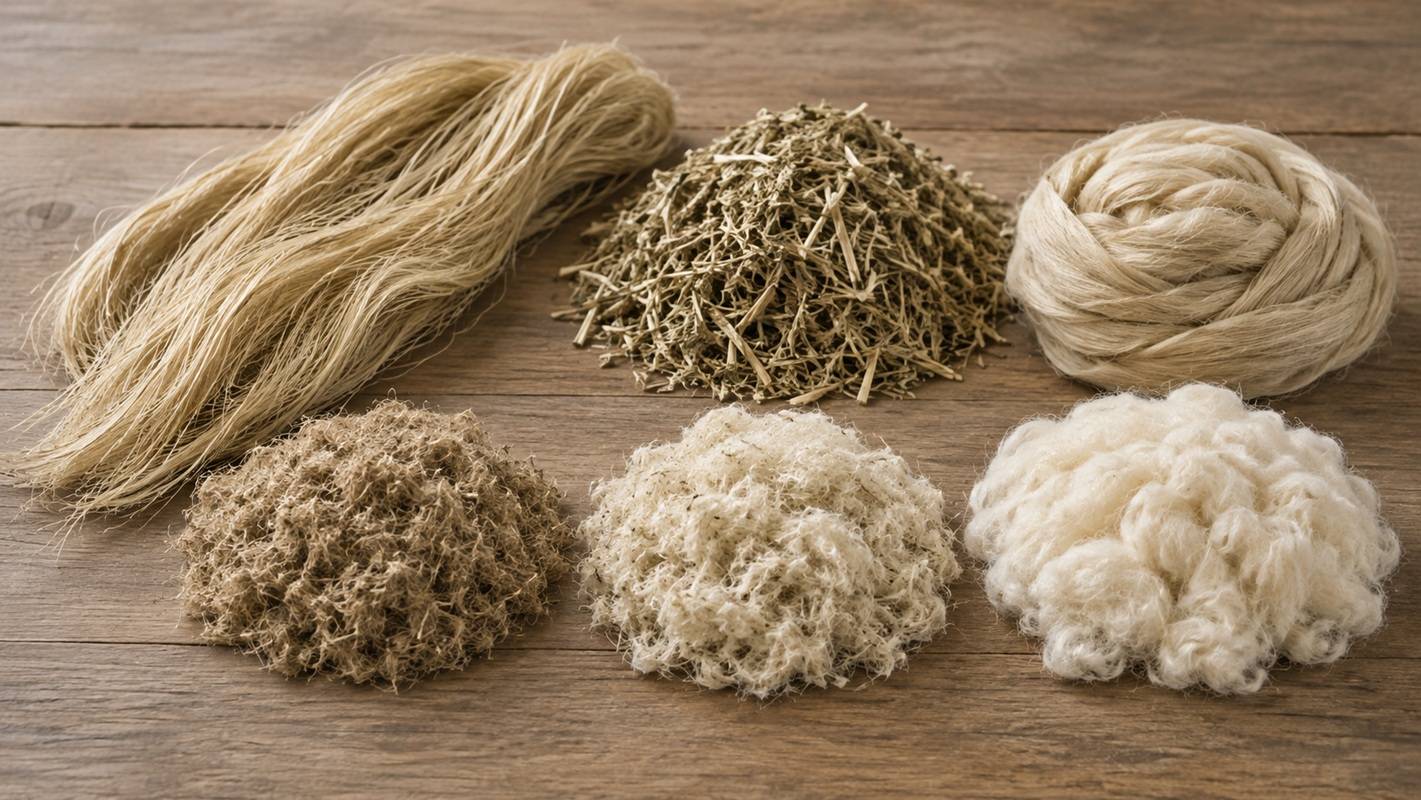
Hemp fiber comes in several forms, from long bast fibers to short fibers, sliver and fibers that have gone through additional processing such as decortication, degumming or cottonization.
These differences matter. Fiber length affects how the material can be handled and processed, while preparation methods can change its cleanliness, fineness, alignment and suitability for further manufacturing.
If you're comparing hemp fibers for a project, start with the material itself. Understanding terms such as long fiber, short fiber, decorticated, degummed, cottonized and sliver will help you narrow down the options before choosing a product.
Hemptique carries hemp fibers in several lengths and forms, along with hemp hurds and other processed hemp materials for textile, craft, agricultural and industrial applications.
Table of Contents:
Hemp Fiber Types at a Glance
The term "hemp fiber" can describe materials at different stages of processing. Here's a quick look at the main forms you'll encounter.
| Hemp Material | What It Is | Main Characteristic | Common Uses |
|---|---|---|---|
| Long hemp fiber | Long bast fibers separated from the hemp stalk | Retains greater fiber length and continuity | Spinning, textiles, cordage and fiber-based applications |
| Short hemp fiber | Bast fiber supplied in shorter lengths | Easier to handle, blend and process | Fiber blends, manufacturing and craft applications |
| Decorticated hemp fiber | Bast fiber mechanically separated from the woody stalk core | Less refined fiber form ready for further processing | Manufacturing, fiber processing and specialty applications |
| Degummed hemp fiber | Bast fiber processed to reduce natural binding materials | Cleaner and more refined | Textile preparation, blending and further fiber processing |
| Cottonized hemp fiber | Hemp processed into shorter, finer fibers | Prepared for short-staple fiber processing | Spinning, textile development and fiber blends |
| Hemp sliver | Hemp fibers prepared as a loose, aligned strand | Fibers are organized in a continuous form | Spinning and further textile processing |
| Hemp hurd | Woody material from inside the hemp stalk | Lightweight and available in different particle sizes | Bedding, soil applications and industrial uses |
Hemp Bast Fiber and Hemp Hurd Come From Different Parts of the Stalk
Before comparing individual fiber types, it helps to understand the basic structure of the hemp stalk.
Bast fiber comes from the fibrous outer portion of the stalk. These long strands can be separated, cleaned and further processed into different fiber forms. Bast fiber is the material used when discussing long hemp fiber, short hemp fiber, degummed fiber, cottonized fiber and sliver.
Hemp hurd, also called hemp shiv, is the woody material found inside the stalk. It has a different structure and serves different purposes.
This distinction is especially important when shopping for raw hemp materials. Short hemp fiber and hemp hurd are not the same product. Short fiber is still bast fiber; hurd comes from the woody core.
Long Hemp Fiber
Long hemp fiber retains longer sections of the plant's bast fibers after separation and processing.
Keeping the fibers long provides greater fiber continuity, which can be useful for spinning, textile preparation, cordage and applications where longer natural fibers are preferred.
The length also affects handling. Long fibers can be aligned and prepared for further fiber processing, but they may require different equipment and preparation than shorter fibers.
Hemptique's Hemp Fiber collection includes 5-inch American Hemp Fiber and 7-inch Long Fiber, giving buyers a choice between different fiber lengths based on their project requirements.
Short Hemp Fiber
Short hemp fiber comes from the same bast portion of the stalk as long hemp fiber but is supplied at a shorter length.
Shorter fibers can be easier to handle, blend or introduce into processes that don't require long continuous strands. They can also be useful when the fiber will undergo additional mechanical processing.
The key distinction is that short hemp fiber remains bast fiber. It should not be confused with hemp hurd simply because both materials are shorter than traditional long bast fibers.
Hemp Fiber Types by Processing
Length is one way to compare hemp fibers. Processing is another.
This is where terms such as decorticated, degummed and cottonized become important.
Decorticated Hemp Fiber
Decortication is the mechanical process used to separate the fibrous bast material from the woody core of the hemp stalk.
The resulting fiber is closer to the initial stage of mechanical fiber preparation than highly refined textile fibers. Depending on the intended use, decorticated hemp may undergo additional cleaning, refining, degumming, shortening or alignment.
This makes "decorticated" an important processing description, but it does not mean the fiber has reached its final form.
Hemptique offers Green Decorticated Hemp Fiber for buyers looking for this less-refined bast fiber format.
Degummed Hemp Fiber
Hemp bast contains natural substances that help bind fiber bundles together.
Degumming reduces these binding materials so the fibers can be separated and refined further.
This produces a cleaner and more processed fiber compared with material closer to the initial decortication stage.
Degummed hemp can be useful where additional fiber refinement is needed before blending, spinning or other processing.
Hemptique's collection includes Degummed Hemp Sliver, combining refined hemp fiber with the organized, aligned form of sliver.
Cottonized Hemp Fiber
"Cottonized" is one of the easiest hemp-fiber terms to misunderstand.
Cottonized hemp does not mean that the hemp has been mixed with cotton.
Cottonization refers to processing hemp bast into shorter, finer fibers so the material can be handled more like other short-staple textile fibers. This can include additional refinement, separation and shortening of the original bast fiber.
The result looks and behaves differently from traditional long hemp fiber.
Cottonized hemp can be considered where shorter, finer fiber is required for textile development, blending or other fiber-processing applications.
Hemptique carries Degummed Cottonized Hemp Fiber, which has undergone both degumming and cottonization.
What Is Hemp Sliver?
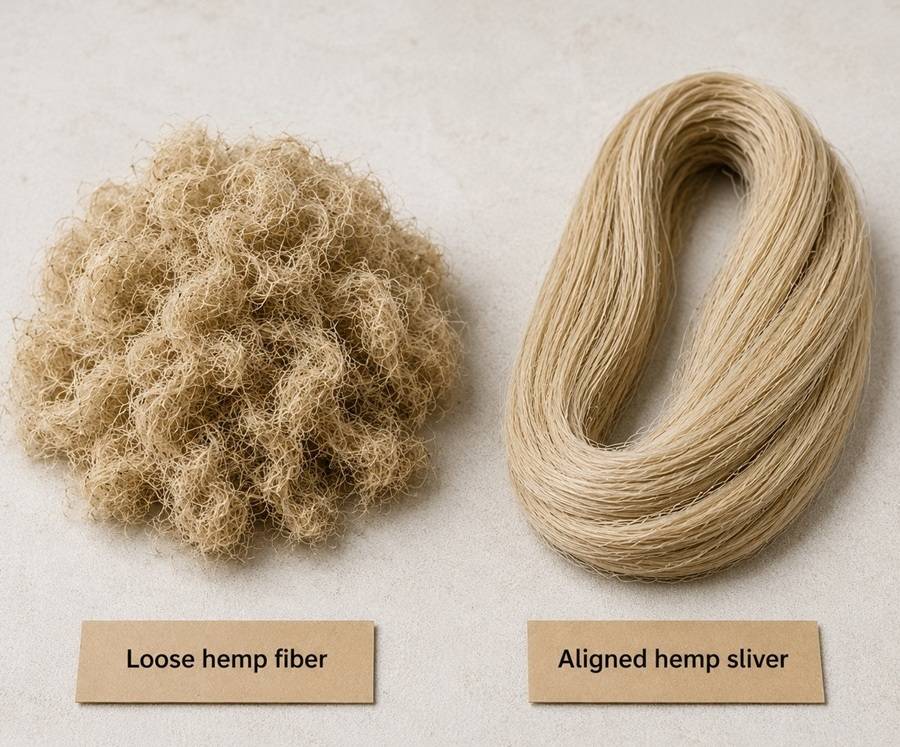
Hemp sliver is easy to recognize because it looks very different from loose hemp fiber.
Instead of individual fibers forming an irregular mass, sliver consists of fibers prepared into a loose, continuous strand. The fibers are more organized and generally run in the same direction.
Instead of individual fibers forming an irregular mass, sliver consists of fibers prepared into a loose, continuous strand. The fibers are more organized and generally run in the same direction.
Sliver is not finished yarn. It is an intermediate fiber form that can undergo further processing.
This alignment is useful when the next stage requires a more organized supply of fiber rather than loose bast material.
Hemptique offers Dark Hemp Sliver and Degummed Hemp Sliver, providing different options based on the level of fiber preparation required.
How to Choose a Hemp Fiber
There isn't one hemp fiber that fits every project. Start with what you plan to do with the material, then compare fiber length, processing and form.
Start With Your Application
Think about what happens to the fiber after you receive it.
Will it be spun, blended, cut, separated or processed further? Are you looking for loose raw material or fiber that has already undergone additional preparation?
Answering those questions will quickly narrow the available options.
Consider Fiber Length
Longer fiber provides greater continuity, while shorter fiber can be easier to handle and process where continuous strands aren't required.
The longest available fiber isn't automatically the right choice. The appropriate length depends on what you plan to make and how the fiber will be processed.
Consider the Processing Level
Look at how much preparation has already been completed.
Decorticated fiber is closer to the initial mechanical separation stage. Degummed material has received additional refinement, while cottonized hemp has been processed into a shorter and finer fiber form.
If your process already includes fiber cleaning, separation or refinement, a less-processed material may be appropriate. If you need material that has undergone additional preparation, degummed or cottonized fiber may be a better starting point.
Decide Between Loose Fiber and Sliver
Loose hemp fiber gives you material that can be opened, separated or processed according to your own requirements.
Sliver provides a more organized form with fibers arranged into a continuous strand.
The choice depends on what you plan to do next with the material.
Hemp Fiber Selection Guide
Use this chart as a starting point when comparing the hemp fiber products available at Hemptique.
| If You Need... | Consider... | Why |
|---|---|---|
| Longer bast material | 5-inch or 7-inch hemp fiber | Provides greater fiber length and continuity |
| Shorter bast fiber | 3-inch hemp fiber | Easier to handle where long continuous fibers aren't required |
| Less-refined separated bast fiber | Decorticated hemp fiber | Provides material closer to the initial mechanical processing stage |
| More refined fiber | Degummed hemp fiber | Natural binding materials have been reduced during processing |
| Shorter, finer processed fiber | Cottonized hemp fiber | Prepared in a form closer to short-staple textile fibers |
| Organized, aligned fiber | Hemp sliver | Supplied as a continuous strand for further fiber processing |
| Woody hemp material | Hemp hurd | Different part of the stalk used for bedding, soil and other applications |
For specialized manufacturing or product-development work, review the specifications of the individual material before choosing a fiber based on this chart alone.
Hemp Fiber Selection Guide
Choosing hemp fiber becomes easier once you know what the product names describe.
Start with fiber length if your process depends on the physical size of the fibers. Look at processing terms such as decorticated, degummed and cottonized when the level of refinement matters. Choose sliver when you need fibers supplied in a more organized, aligned form.