


Peter Nyari did not set out to start a company. He set out to carry something forward.
It began with his grandparents, in Hungary, a long time ago — on a farm along an acacia-lined road, with a plant their family had grown, spun, woven, and lived with for as long as anyone could remember. To understand Hemptique, you have to start there. So that’s where we’ll start.

Piroska was pretty and sharp, and she had a singing voice that people remembered — clear and strong, the kind that carried across a courtyard and made people stop what they were doing. At twelve, she had big plans. She wanted to be educated. She wanted to choose her own husband. She had a fairly specific idea of the handsome, well-to-do gentleman she intended to grow old with.
Life, as it tends to, had its own ideas. But that’s getting ahead of the story.
At thirteen, she took up the work of the women before her. She spun fiber into thread, wove thread into cloth, and embroidered that cloth with a color sense and a steadiness of hand that surprised even her mother. Kitchen towels. Table runners. Pillowcases. Every piece monogrammed. Every piece made a little better than it strictly needed to be, because she simply couldn’t bring herself to do it any other way.
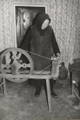
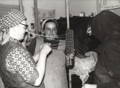
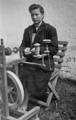
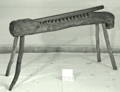
Gömöri Múzeum; Putnok, CC BY-NC-ND
Múzeum, CC BY-NC-ND

Piroska married a man the family would always call Tata.
He had very nearly become a priest. As a young man he was a gifted student — the kind teachers remember for years — with a natural talent for speaking that could hold a room. His headmaster and the school’s principal both believed he was destined for the Church, and they made the case, more than once, that he should leave the farm and study theology.
It was not to be. The family farm needed him, and in that time and place, the land won that argument. So Tata stayed, and he made his peace with it in the most quietly remarkable way: he poured into his fields all the devotion he might have brought to a pulpit. Farming became his vocation and, Peter has always suspected, his faith. He worked the land the way a man works at something he believes in completely — steadily, without complaint, season after season, for the whole of his long life.
He was lean and soft-spoken and impeccably mannered, a giver by nature. He raised his children to be strong and capable, and he loved them in the way of men of his time and place — through presence, consistency, and honest work, rather than through words. He was not a man for grand declarations. He was a man who showed up, every single day, and did the work in front of him as well as it could be done.
He had lost the sight in one eye years before, to a young stallion that kicked without warning on a winter morning. And yet — here is the thing about Tata — he loved horses, and the horses loved him back. It would have been easy to hold a grudge. But a grudge was not in his nature, and in any case the fault had been the stallion’s youth, not the animal itself. He kept his horses well fed and well groomed, and he farmed his land with them: plowing, hauling, carrying the family wherever it needed to go. He rode out on them to survey the fields he loved and to call on neighboring farms and old friends.
The horses knew him the way good working animals know a steady man. On the long road home he could fall asleep on the moving carriage — genuinely asleep, the reins loose in his hands — and the horses would carry him back to the farm without a word of guidance, day or night. A man who had lost an eye to a horse, sleeping soundly in a horse’s care. Peter has never found a better picture of the trust his grandfather built with the things he tended.
Peter sometimes wonders what kind of priest his grandfather might have been. Whatever it would have been, the fields had it instead — and were the better for it.

Piroska and Tata’s daughter — Peter’s mother — grew up on that farm. She helped in the fields and worked alongside her parents through the seasons, learning early what it meant to begin something and finish it properly.
She carried that into a busy and accomplished life. She rose to a leadership position at a local garment company, where she managed people, production, and the daily demands of a serious industry — all while raising her family and keeping her connection to the farm alive. She had a great deal on her plate, and she carried it gracefully, holding herself and everyone around her to the high standard she had grown up with.
Peter watched her do this for years. She rarely lectured anyone about how things ought to be done. She just did them well, and let that speak. It was the same lesson Piroska taught and the same one Tata lived — arriving now in a third generation, in a different decade, without losing anything along the way.
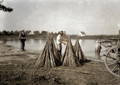
CC BY-NC-ND
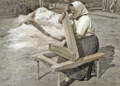
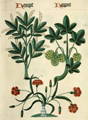
“Its main advantage is that body linen is made out of its thick fluff that grows on its weed, which is soaked in water and then braked to separate it from its weed.” – 1792
❝Where home industry was introduced, it showed great successes. Hemp and flax are handled in home industry in many regions, busy housewives process them with great skill; they spin and weave fibres, and make clothes for themselves or sell them. And this private activity gets some savings money to the family.❞
According to Iván Balassa’s disputed theory, Hungarians knew and grew hemp even before the conquest (9th century). Besides ropes and strings, they made accessory elements of clothes, like belts, from hempen fibre. This theory seems to be backed up by the fact that the Hungarian word “kender” is a loanword of ancient Turkish origin from the period before the Hungarian conquest. It is certain that indigenous Slavs in the Carpathian Basin already cultivated it in waterside settlements before the conquest.

If you had walked into Piroska and Tata’s house, you might not have noticed at first how much of it was made from the plant growing in the fields outside. That was rather the point.
The kitchen towels were embroidered in Piroska’s own hand and still crisp after hundreds of washings. There were table covers, napkins, and chair cushions. In the pantry: flour sacks, grain sacks, cheesecloths, and bread covers that kept a loaf fresh for days with nothing more than good fiber and good craft. The beds were dressed in hemp sheets; the windows in hemp curtains. On the walls hung embroidered panels — hunting scenes, country landscapes, old Hungarian verses — each one made by hand, each one quietly telling its own little story.
Tata wore hemp shirts. The children wore hemp. Even the house had hemp in its bones — its walls built partly from earthen clay, lime, and the woody core of the hemp stalk, a combination that breathed in summer and held warmth in winter. Out in the fields, hemp grew as a rotation crop, quietly improving the soil and keeping the weeds down without a drop of anything synthetic, before being harvested and turned back into the very things the household needed.
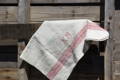
To the people who lived there, none of this was remarkable. It was simply how a well-run farm worked. They weren’t making a statement. They were making a living, and making it well.
And through the long winters, Piroska kept her hands busy — embroidering, crocheting, knitting, combining the three into pieces of real intricacy. She kept at it well into her seventies. Her hands knew the work, and saw no reason to stop.

The farm sat along a country road lined with acacia trees — the main artery through that part of the countryside, connecting one well-kept farm to the next. From above, the farms would have looked like small green islands scattered across an almost flat sea of cultivated land.
The acacia was not native to the region, but it had taken to it completely. Hardy and armored with thorns, the trees threw out the most fragrant flowering season every spring, and the bees worked them without rest. The result was pure acacia honey — to this day one of Hungary’s most prized varieties. When the acacia finished, the bees simply followed the season, moving from one bloom to the next as the year unfolded.
Hemp was one of the crops that kept the land in good health — sown in rotation, year after year, because it made all the difference to the soil and to the people who depended on it. It made a difference to a small boy, too. One of Peter’s least favorite chores was minding the geese, and chief among his duties was keeping the flock off the neighbors’ land, where the tender young corn and wheat were far more tempting than anything on home ground. When hemp lined the road, the job got easier. Hemp grows fast and tall, and the geese had no interest in its tough stems — though they were glad enough to rest in the cool shade beneath its canopy.
It was one of those summer evenings. A hundred or more big white geese had eaten their fill and settled in for the last of the dusk, nibbling the grass and keeping up the low, contented gossip that geese carry on among themselves. Nearby lay the family’s Puli — a corded Hungarian herding dog named Pici, which means “Tiny,” a name he had long outgrown in spirit if not in size — resting with one ear half open.
Then Pici lifted his head and let out a low grunt. He had heard it before anyone else: his great enemy, the evening freight train, fifty cars or more, coming up the line that ran alongside the road.
Pici loved that train the way only a dog can love a thing it has decided to hate. Chasing it was the great work of his life. But this evening he had a problem. The geese had begun to stir and complain, frightened and restless, and he was supposed to be watching them. Stay and tend the flock, or do the thing he had been born to do? He looked at Peter and made his case the only way he knew how — rising up on his hind legs, pressing his front paws together, and waving them up and down in a begging gesture so comically earnest that it could only be answered one way: Go on, then. Do your worst.
The train, of course, was faster than any goose. The well-fed flock heaved itself up, bunched into a tight white circle, and went waddling down the road toward the farm with all the urgency it could manage — which was not much. And then the engineer, unable to help himself, pulled the whistle.
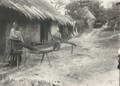
Balatoni Múzeum, CC BY-NC-ND
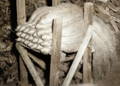
Many evenings on that farm ended more or less this way. They were a trial at the time. Peter has come to treasure every one of them.
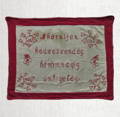

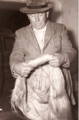
Thorma János Múzeum, CC BY-NC-ND

Not every evening was chaos. Some were very still.
Of everything Peter remembers from his childhood, one quiet moment stayed sharper than the rest. He was two and a half years old, standing in the summer barn beside his grandmother. He remembers the sound of milk hitting the bottom of a pail, the smell of hay, the cow standing patiently with her jaw moving in slow circles. And he remembers Piroska’s voice, low and unhurried:
Come closer and bring your cup.
He held out his tall aluminum cup. She took a piece of cheesecloth — hemp, of course, worn soft from many washings — stretched it across the top, and poured the milk through it, warm and white and fresh from the pail. Then she lifted the cloth away and handed the cup back to him.
“Go ahead and drink it all. It will make you strong and healthy.”
He drank every drop, and came up with a white foam mustache across his lip. She looked at him and laughed.
He has never quite been able to explain why that ordinary morning stayed with him so clearly when so much else faded. Maybe it was the warmth of the milk, or the smell of the barn, or simply the sight of his grandmother doing something she had done ten thousand times before — not as a chore, but as a small act of care. The cheesecloth wasn’t a choice she thought about. It was just what you used. It was always there.
Years later, on the other side of the world, that cup of milk turned out to be where Hemptique began.
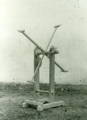
Thorma János Múzeum, CC BY-NC-ND

Tata’s horses carried the family through the whole turning of the year, and the year on a farm has its ceremonies.
At harvest time, the families dressed up. Out came the folk costumes, embroidered and bright, and the carriages were dressed too — and the horses with them — for the procession to the local harvest festival. It was the land’s reward for a season of work, paid out in music and color and the company of neighbors.
Winter did not end the festivities; it only changed their shape. When the fields lay under snow, Tata organized sled rides across the white countryside, with hot cider and singing and music carried out into the cold. The land was asleep, gathering itself in silence for the next beginning — but the people were not. Even the deep of winter held its share of warm, bright evenings, while underfoot the ground rested and quietly prepared to start again.

Peter eventually left Hungary and made his way to California — a journey with many steps and no tidy ending. Years passed. And when he found himself thinking about what kind of work he actually wanted to do, what kept coming back to him weren’t business ideas. They were things he could almost feel: the texture of his grandmother’s tablecloths, the smell of the summer barn, the satisfying weight of something made to last. The acacia road at dusk. A dog who hated a train.
He wasn’t looking for a clever gap in the market. He was looking for a way to do something honest.
He had grown up watching a family live well on what the land provided — nothing wasted, nothing synthetic, nothing built to be thrown away — and he had watched his mother carry those same standards into a fast-moving modern career without ever letting them slip. He believed in all of it. Not as a philosophy he’d reasoned his way into, but as something he had simply grown up inside.
So he started with cord, in 1997. The most basic, elemental thing you can make from hemp — the stuff that has held things together since long before anyone thought to write any of it down. Starting at the very beginning felt right.
From that cord, Hemptique grew. Slowly, and without shortcuts, over the better part of three decades, into a range that now covers most of what a person reaches for in an ordinary day — not because some grand plan demanded it, but because one honest product kept leading naturally to the next.
What Peter is still trying to say with all of it is something his grandmother never had to put into words at all. She just lived it: that a life made from natural, honest things — grown from the ground and returned to it — is a richer life. Not a poorer one. A richer one.

The antique half matters as much as the hemp. The point of the name is that this isn’t a new idea — it’s an old one, rediscovered. Hemp has been cultivated for thousands of years, across nearly every culture, for the simple reason that it was genuinely useful. It clothed people, built their homes, and improved the soil it grew in. It fell out of everyday use within living memory, for a tangle of reasons that had little to do with the plant itself. The name is a gentle reminder of all that came before — and a quiet suggestion that it’s worth coming back to.

The H Shield — the little emblem you’ll find on Hemptique products — is a classic artisan’s mark, the kind craftspeople have pressed into well-made goods for centuries. It’s meant to feel like it’s been around a while. In spirit, it has.

Piroska embroidered well into her seventies. For years she managed without glasses, and when her eyes finally insisted on them, she simply put them on and carried on — her hands knew the work far too well to be slowed down by anything so minor.
The pieces she made over her lifetime are scattered through the family now — not tucked away as keepsakes, but still in use. Kitchen towels washed a thousand times. Table covers brought out for the meals that matter. Pillowcases worn soft by years of honest use. Things made so well, from a material so durable, that they simply refuse to wear out.
Peter likes to think about that. About what it means to make something that lasts — not because it was engineered to, but because it was made with care, from something worth trusting.
That, in the end, is what Hemptique is for. Through cord and twine and fabric, through everything in the range, the goal is a simple one: to offer anyone who wants it a small piece of something older and more honest than most of what fills a life today.
No grand claims. Just things made well, from materials worth trusting, by a company that knows exactly where it came from — a farm along an acacia road, where the work was hard, the evenings were loud, and nothing good was ever wasted.