Damage usually comes from tension and placement, not the cord itself. Using thin materials, leaving slight slack and avoiding tight knots near edges helps reduce stress on paper during handling.


Scrapbooking Cords and Threads
Material choice, thickness and handling for paper-based projects
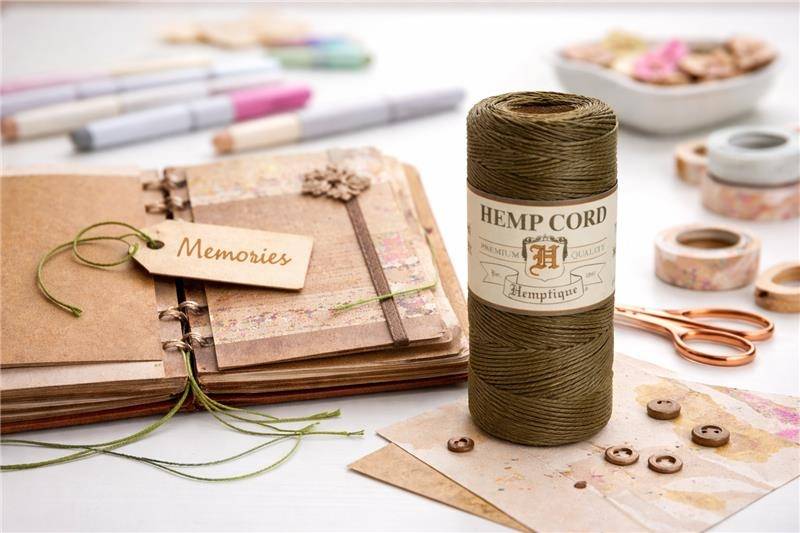
Scrapbooking relies on materials that interact directly with paper, cardstock and layered pages. While adhesives and papers often get the most attention, cords and threads play an equally important role in how a scrapbook functions over time. They influence how pages turn, how closures behave and how much bulk builds up as projects grow.
Table of Contents:
Why Material Choice Matters in Scrapbooking
Cord, Twine and Thread: What the Difference Means on Paper
Thickness and Scale: Why Size Matters More Than Expected
How Different Fibers Behave With Paper
Common Scrapbook Uses for Cord and Thread
Mistakes That Cause Bulk, Tearing or Awkward Pages
Where Natural Fibers Make Sense in Scrapbooking
Why Material Choice Matters in Scrapbooking
Paper-based projects behave differently from fabric or structural crafts. Paper has limited tolerance for tension, friction and repeated movement. The cord or thread used alongside it can either support the structure of a scrapbook or introduce stress that shows up later as tearing, warping, or uneven pages.
- Material choice affects:
- How much pressure is placed on punched holes or bindings
- How pages open and close once layers are added
- How flexible or rigid a finished book feels in use
Cords that work well in other crafts can feel oversized or stiff when paired with paper. Understanding how materials interact with paper helps avoid these issues early in the process.
Cord, Twine and Thread: What the Difference Means on Paper
The terms cord, twine, and thread are often used interchangeably, though they behave very differently in scrapbook applications. The distinction becomes noticeable once materials are tied, layered or wrapped through paper.
- Thread is thin and flexible. It adds minimal bulk and works well for light bindings, stitching or subtle attachments. Its small diameter places less stress on paper edges.
- Twine sits between thread and cord. It offers more structure and visual presence while remaining flexible enough for tags, wrap closure, and simple bindings.
- Cord is thicker and more defined. In scrapbooking, it is usually used sparingly for closures, accents or external bindings where visual weight is intentional.
On paper, the main differences show up in:
- Knot size and profile
- How much space the material occupies between pages
- How freely pages can move once assembled
Choosing the right category helps maintain balance between structure and flexibility.
Thickness and Scale: Why Size Matters More Than Expected
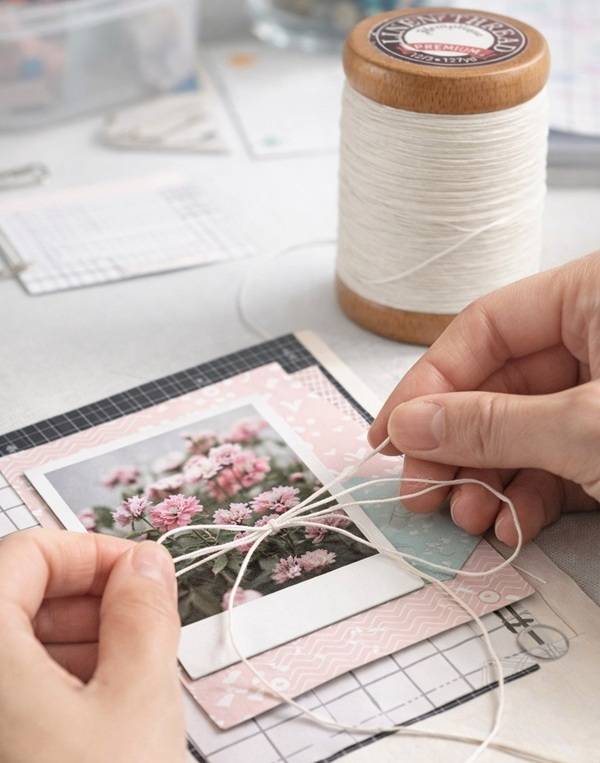
Thickness has a greater impact on scrapbook performance than many people anticipate. Even small changes in diameter can affect how a book closes, how pages stack and how comfortable the finished piece feels in hand.
Thinner cords and threads work well for:
- Tags and attachments
- Light bindings
- Accents that sit close to the page surface
Medium-weight cords support:
- Wrap closures
- Simple spine bindings
- Decorative elements that need definition without excess bulk
Very thick cords tend to introduce stiffness and spacing between pages. When used inside a book, they can prevent pages from lying flat or cause uneven pressure near holes and edges.
How Different Fibers Behave With Paper
Not all cords and threads interact with paper in the same way. Fiber type affects surface texture, flexibility, knot definition and how pressure is distributed around holes, edges and folds. These differences become more noticeable as pages are layered and handled over time.
Hemp cord
Hemp cord has a distinct natural texture and a firmer structure compared to many other fibers. On paper, this texture provides clear grip and visual definition.
In scrapbooking, hemp cord is often used where:- A visible, tactile element is desired
- Knots need to stay in place without slipping
- The cord sits on the surface of a page or cover
Because hemp has more structure, it is typically used in thinner sizes for paper-based projects. Thicker hemp cord can add unwanted bulk when placed between pages or pulled tightly near punched holes.
Cotton twine
Cotton twine is softer and more flexible, which changes how it behaves against paper surfaces. It compresses slightly under tension and has a smoother feel in the hand.
- Light bindings
- Wrap closures
- Situations where minimal pressure on paper is important
Cotton’s softness reduces friction against paper edges, though knots may require more attention to keep them secure, especially with repeated opening and closing.
Linen thread and cord
Linen sits between hemp and cotton in both structure and surface feel. It has a smoother profile than hemp while remaining more defined than cotton.
- Clean knot definition
- Controlled tension during tying
- A low-profile presence when used in fine sizes
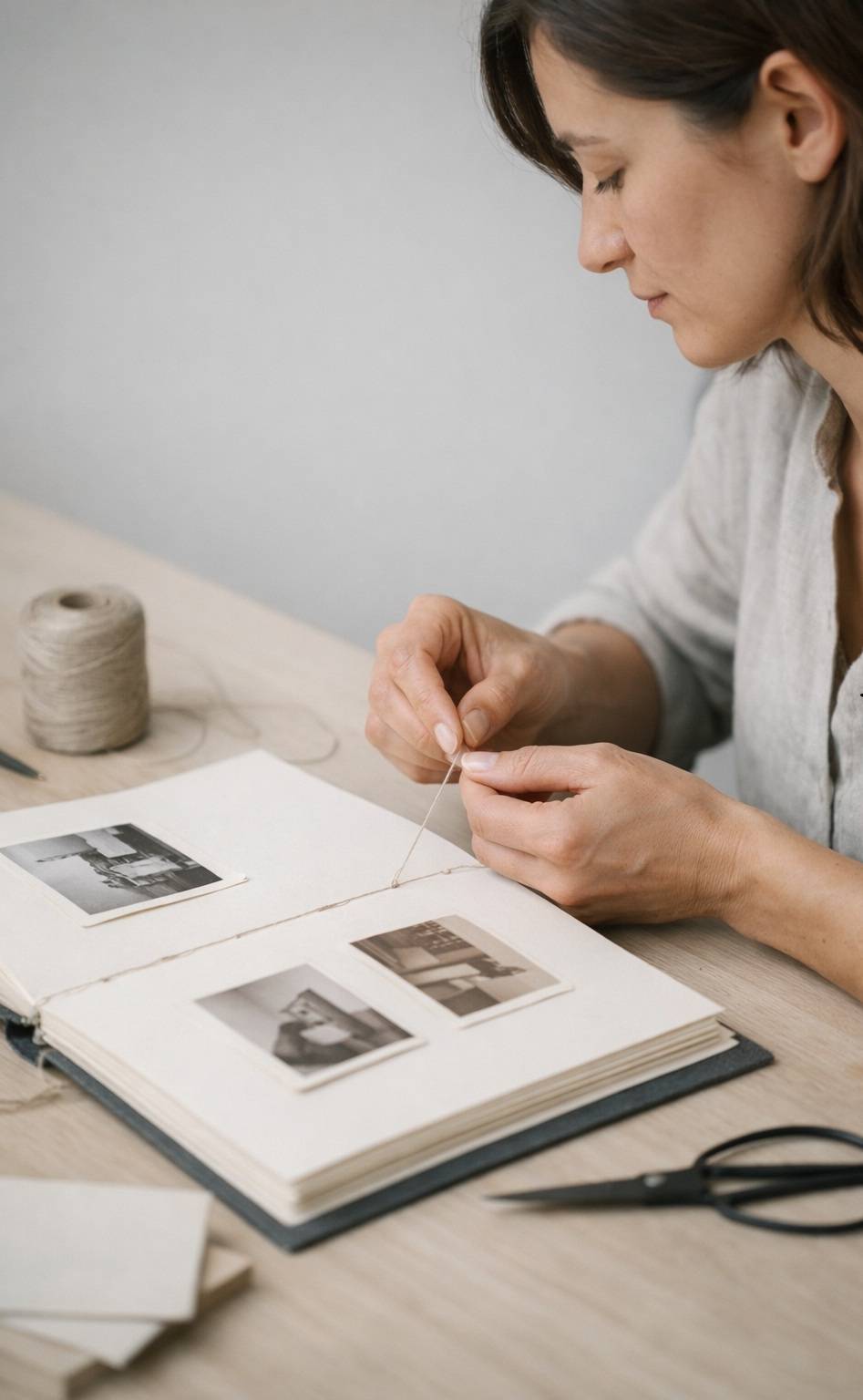
Linen thread and fine linen cord are commonly used where precision matters, such as simple bindings, stitched elements or closures that should remain unobtrusive.
Why fiber choice affects longevity
Paper reacts to repeated movement, pressure and tension. Fibers that distribute force evenly and avoid sharp compression points help reduce stress around holes and edges.
- Pages that turn freely
- Bindings that hold without distortion
- Projects that remain usable as layers accumulate
Understanding these behaviors makes it easier to select cords and threads that complement paper rather than work against it.
Common Scrapbook Uses for Cord and Thread
Cords and threads are used in scrapbooking for both functional and visual purposes. How they are applied affects page movement, durability, and the overall feel of a finished project. Understanding where each type of material fits helps avoid unnecessary bulk or stress on paper.
Tag attachments and journaling elements
Tags, labels and journaling cards are among the most common uses for cord and thread in scrapbooking. These elements are handled often and usually hang or move freely.
For this use, thinner materials tend to work best because they:
For this use, thinner materials tend to work best because they:
- Pass easily through small punched holes
- Add minimal weight to the page
- Allow tags to move without pulling on the paper
Light hemp cord, fine cotton twine or linen thread are often used here, depending on the desired texture and visibility.
Simple bindings and spine ties
Some scrapbook formats rely on exposed bindings or tied spines instead of rings or adhesives. In these cases, the cord or thread becomes part of the structure.
Materials used for binding benefit from:
Materials used for binding benefit from:
- Controlled tension without cutting into paper
- Consistent thickness along the spine
- Knots that remain stable as pages are turned
Fine to medium-weight cord is usually sufficient. Oversized materials can prevent pages from aligning evenly and may cause stiffness when opening the book.
Wrap closures and covers
Wrap-style closures are often used to keep albums closed as they fill with pages. These closures are adjusted repeatedly as the project grows.
Cords used for closures should:
Cords used for closures should:
- Bend easily around layered pages
- Tie and untie without damaging edges
- Sit flat against covers when wrapped
Medium-weight twine or cord works well here, offering structure without excessive rigidity.
Decorative accents and separators
Cords and threads are sometimes added purely for visual emphasis, acting as separators, borders, or tactile details on a page.
In these situations:
In these situations:
- Thickness controls visual weight
- Texture influences contrast against paper
- Placement determines whether pages remain flexible
Using thinner materials keeps accents from interfering with page movement while still adding depth.
Balancing function and flexibility
Across all scrapbook uses, the same principle applies: materials that support movement tend to age better. Cords and threads that allow pages to open, close and shift naturally reduce stress on paper and maintain usability as projects evolve.
Mistakes That Cause Bulk, Tearing or Awkward Pages
Many scrapbook issues appear only after pages are assembled and handled over time. These problems are often linked to material choice and how cords or threads interact with paper under movement and tension.
Using cord that is too thick for the project
Thicker cord can feel appealing because it looks sturdy, though on paper it often creates unintended spacing between pages. This leads to albums that do not close evenly or feel stiff when opened.
- Pages that fan outward
- Uneven pressure along the spine
- Covers that resist lying flat
Selecting a thinner cord usually resolves these issues without sacrificing durability.
Pulling ties too tightly near paper edges
Paper has limited tolerance for concentrated pressure. When cords are pulled tightly near punched holes or page edges, stress builds in a small area.
- Enlarged holes
- Small tears that spread with use
- Weakened page corners
Leaving slight slack allows pages to move naturally and reduces localized strain.
Ignoring how pages move once bound
A scrapbook is handled repeatedly. Pages turn, shift and settle as layers are added. Materials that restrict movement can work against this natural behavior.
- Rigid cord is used in interior bindings
- Knots are placed where pages flex
- Closures are not adjusted as the book fills
Considering page movement during material selection helps avoid these problems.
Overlayering rigid materials in one area
Bulk builds quickly when multiple rigid elements are stacked in the same location. Cord, cardstock, and embellishments combined near a binding or edge can amplify stiffness.
Treating cord as decoration only
Cords and threads influence structure as well as appearance. When used without considering tension and placement, even decorative elements can affect how a page functions.
Viewing cord as both a visual and functional component helps prevent unintended stress and improves long-term usability.
Viewing cord as both a visual and functional component helps prevent unintended stress and improves long-term usability.
Where Natural Fibers Make Sense in Scrapbooking
Natural fibers are often chosen for scrapbooking because of how they look and feel, though their practical advantages matter just as much. When used thoughtfully, they complement paper-based projects without overpowering structure or movement.
Compatibility with paper surfaces
Paper reacts to pressure, friction and repeated handling. Natural fibers tend to distribute tension more evenly, especially when used in thinner sizes. This helps reduce stress around holes, folds, and edges during regular use.
Visual balance and texture
Scrapbooks often combine smooth paper, printed elements and layered materials. Natural fibers introduce texture without introducing shine or stiffness that can distract from the page.
- Neutral or earthy color palettes
- Kraft, recycled or textured papers
- Projects that rely on subtle contrast rather than bold embellishment
Natural cords and threads tend to age visually alongside paper, maintaining a consistent look as projects are handled over time.
Flexibility during adjustment
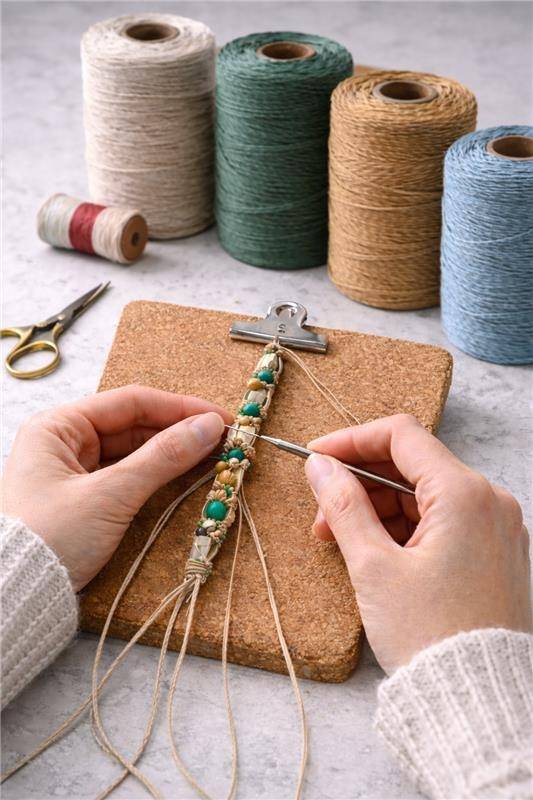
Scrapbook projects often change as pages are added or rearranged. Natural fibers remain workable during adjustment, supporting retying, repositioning and gentle tension changes without sudden resistance.
- Wrap closures
- Exposed bindings
- Elements that need occasional repositioning
Materials that remain manageable over time help projects adapt without damage.
Practical considerations beyond appearance
Beyond aesthetics, natural fibers support practical needs such as ease of handling and predictable behavior. They allow for controlled tying, stable knots and straightforward removal if elements need to be revised.
Find Reliable Cords and Threads for Scrapbooking
Once thickness, fiber type and handling needs are clear, the remaining question is consistency. Scrapbooking relies on materials that behave predictably at a small scale, where variation in diameter or texture becomes noticeable quickly.
Hemptique has worked with natural fibers since 1997, supplying hemp, linen and cotton cords used across crafts and professional applications. This long-term focus supports consistent sizing, controlled finishes and materials that perform reliably when used with paper.
For scrapbooking, thin cords and threads are most commonly used. Products such as #10 hemp cord, fine cotton twine, and lightweight linen thread provide structure without excess bulk. These materials are often chosen for tags, bindings, wrap closures, and subtle accents where both appearance and function matter.
Hemptique’s range makes it possible to match material type and thickness to specific scrapbook uses, reducing trial and error and helping projects maintain balance as pages are added. When cords and threads behave consistently, attention can remain on design and storytelling rather than correcting material issues.
FAQ
Will cord damage scrapbook pages over time?
Is hemp cord too rough for scrapbooking?
In thinner sizes, hemp cord works well for scrapbooking. Its texture provides grip and definition, though thicker hemp cord can feel bulky on paper and is better used sparingly.
What thickness works best for scrapbook bindings?
Fine to medium-weight cord or thread is usually sufficient. Thinner materials allow pages to align and turn freely, while very thick cord can add stiffness and spacing between pages.
Can cord be reused if a scrapbook is adjusted later?
Yes. Natural fibers such as hemp, cotton and linen can be untied and repositioned if adjustments are needed. This is useful for wrap closures and exposed bindings that change as pages are added.
Do natural cords affect how a scrapbook closes?
Material choice influences bulk and flexibility. Using thinner cord and distributing it evenly helps albums close more naturally as layers build up.