Most plant hangers require 5–7 times the finished length, plus extra for knots and adjustments.


Macrame Cord Length Calculator: How Much Cord Do You Need?
Stop guessing cord length and avoid running out mid-project
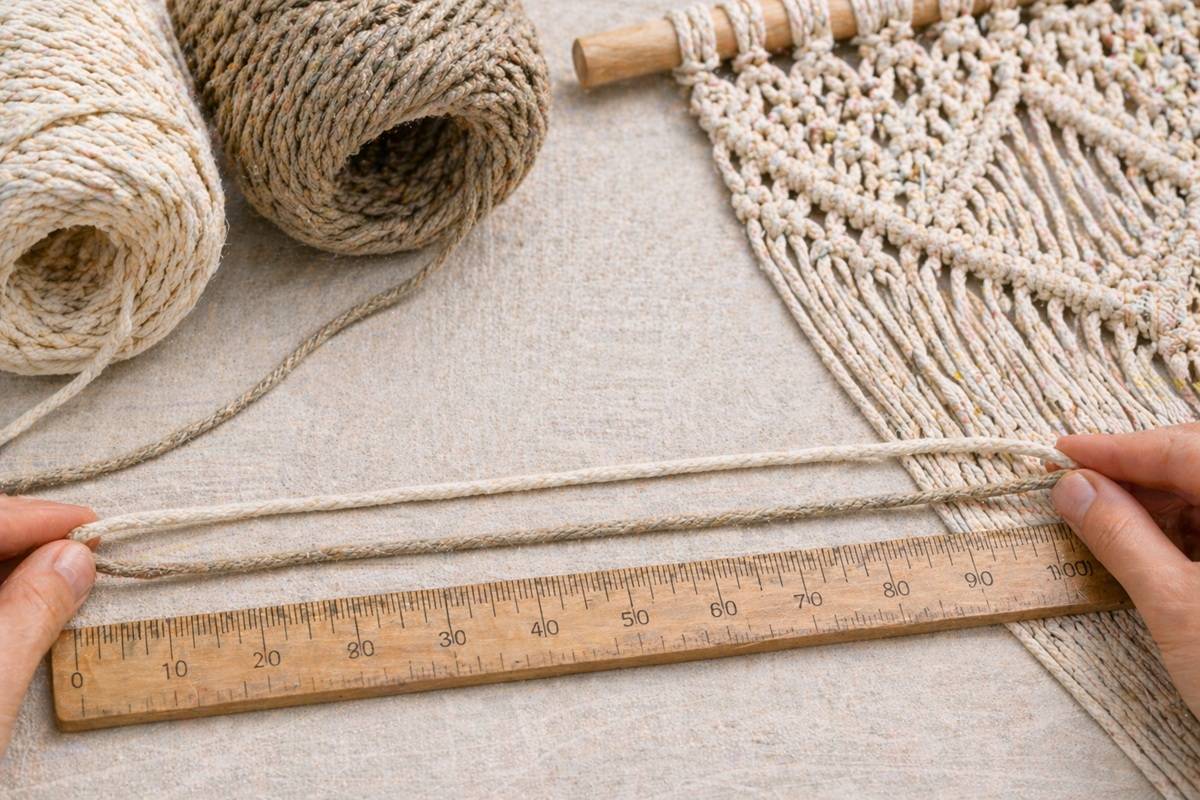
Running out of cord halfway through a macrame project is one of the most common mistakes beginners make. Cutting too much isn’t ideal either, it wastes material and makes knotting harder to manage.
Table of Contents:
Macrame Cord Length Calculator
Estimate how much cord to cut based on your project type, finished length, cord thickness, knot style, and number of strands.
Recommended multiplier—
Cut length per strand—
Safer cut length per strand (+15%)—
Total cord needed—
Total in feet—
This calculator gives a practical estimate. Actual cord usage may vary depending on knot tension, fringe length, and pattern density.
Quick Answer: How Much Cord Do You Need?
Most macrame projects follow a simple rule:
Use 3x to 6x the finished length of your project
Add 15–20% extra to avoid running short
Example:
If your finished wall hanging is 20 inches long:
- Minimum cord length: 20 × 4 = 80 inches
- Safer range: 80–120 inches per cord
The exact amount depends on:
- Knot type
- Cord thickness
- Project style
Simple Calculation Formula
Use this formula before starting any project:
Cord Length = Finished Length × Multiplier + Extra (15–20%)
Cord Length = Finished Length × Multiplier + Extra (15–20%)
| Project Type | Multiplier | Example (Finished Length → Cord Needed) |
|---|---|---|
| Wall hanging | 4–6x | 20” → 80–120” |
| Plant hanger | 5–7x | 30” → 150–210” |
| Keychain / small | 3–5x | 10” → 30–50” |
| Large designs | 6–8x | 40” → 240–320” |
Tip: Always round up. It’s easier to trim excess than fix cords that are too short.
Cord Length by Project Type
Different projects consume cord at different rates. Here’s what to expect.
Wall Hangings
- Typical multiplier: 4–6x
- Moderate knot density
- Works well with 3mm–5mm cord
Best for beginners and decorative pieces.
Plant Hangers
- Typical multiplier: 5–7x
- More knots + vertical structure
- Requires extra length for gathering knots and spacing
These projects almost always need more cord than expected.
If you're following a tutorial, like this on how to make a macrame plant hanger, always match the recommended cord length and thickness for accurate results
If you're following a tutorial, like this on how to make a macrame plant hanger, always match the recommended cord length and thickness for accurate results
Keychains and Small Projects
- Typical multiplier: 3–5x
- Short length, fewer knots
- Easier to estimate
Good for practice and testing new knot styles.
Large Statement Pieces
- Typical multiplier: 6–8x
- Dense knotting + longer drop length
- Often requires planning in sections
Used for oversized wall art or installations.
How Cord Thickness Affects Length
Cord thickness changes how much material your knots consume.
Thin cord (1–2 mm)
- More knots required
- Higher multiplier (5–7x)
Medium cord (3–4 mm)
- Balanced usage
- Standard multiplier (4–6x)
Thick cord (5 mm+)
- Fewer knots
- Lower multiplier (3–5x)
Even small differences in thickness can change how much cord your project requires. If you’re unsure what size to use, refer to our macrame cord size chart and thickness guide to choose the right option for your project.
How Knot Type Changes Cord Usage
Not all macrame knots use the same amount of cord. This is one of the biggest factors people overlook.
- Square knots - Medium usage, standard multiplier
- Spiral knots (half square knots) - High usage, cords shorten faster
- Lark’s head knots - Low usage, mainly for attaching cords
- Dense decorative patterns - Highest usage due to layering and repetition
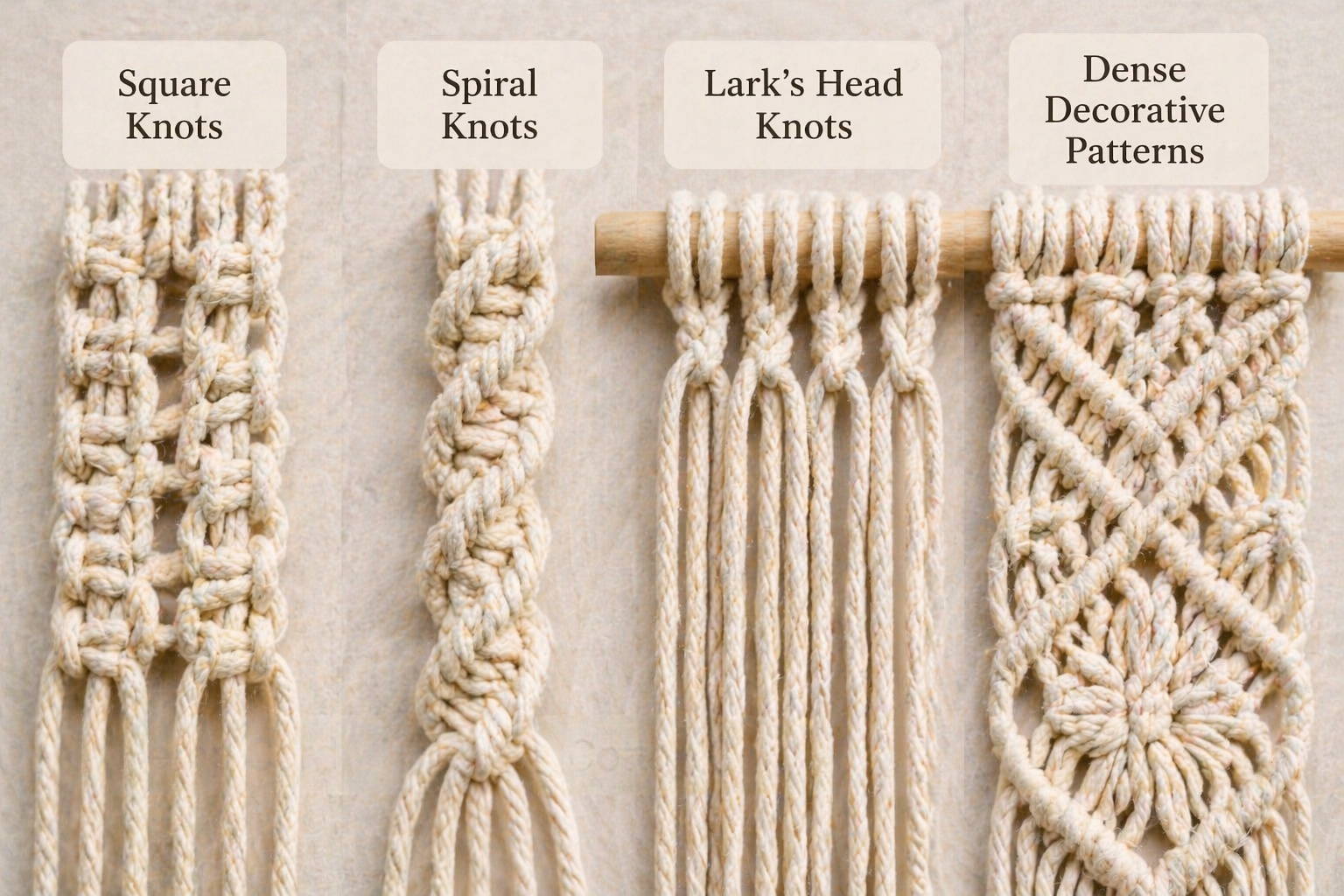
If your design uses many spiral or layered knots, increase your multiplier.
Step-by-Step: How to Measure Cord Before You Start
Use this simple process for accurate results:
1. Define the finished length
Decide how long your project will be (for example, 24 inches).
2. Choose your cord thickness
Thicker cords reduce required length. Thinner cords increase it.
3. Apply the multiplier
Multiply your finished length by 4–6x (or more depending on project).
4. Add extra length
Always include 15–20% extra for safety.
5. Cut and organize cords
Lay them out before starting to avoid confusion during knotting.
Common Mistakes That Waste Cord
Avoid these issues to save time and materials:
Cutting cords too short
Ignoring knot density
Using the wrong multiplier
Skipping extra allowance
Not testing first
For complex projects, test a small section before cutting all cords.
The most common mistake. Always round up.
More knots = more cord used.
Plant hangers and dense designs need more cord.
That extra 15–20% prevents frustration later.
For complex projects, test a small section before cutting all cords.
Get the Right Cord Length Before You Start
Macrame doesn’t require exact calculations, but using a simple formula helps you avoid mistakes and wasted material. Once you understand how project type, cord thickness and knot style affect cord usage, estimating length becomes much more predictable.
Instead of guessing, you can start every project with the right amount of cord and focus on the design itself.
FAQ
How much cord do I need for a macrame plant hanger?
Can I use less cord than recommended?
You can, but it increases the risk of running out before finishing. It’s safer to cut slightly more.
What happens if my cord is too long?
You can trim the excess after finishing. Longer cords may feel harder to manage, but they won’t ruin the project.
How do beginners estimate cord length?
Start with:
- 4–5x multiplier
- Medium thickness cord (3–4 mm)
This gives a safe baseline for most projects.
Does cord material affect length?
Yes. Natural fibers like cotton, hemp and linen grip differently and affect knot tightness, which can slightly change how much cord is used.